Your Ultimate SFO Travelers Guide: Navigating San Francisco International Airport
San Francisco International Airport (SFO) is more than just a transit hub; it’s a dynamic gateway that embodies the spirit of innovation and connection inherent to the San Francisco and Bay Area region. As a premier global gateway, SFO serves millions of travelers annually, facilitating both domestic flights and international flights with remarkable efficiency. For many, navigating this sprawling airport can seem daunting, but with the right information, your journey through SFO can be smooth, stress-free, and even enjoyable. This comprehensive guide is your essential roadmap, designed to equip you with all the knowledge needed to confidently navigate San Francisco International Airport, from pre-flight planning to your final departure. Whether you’re a seasoned globetrotter or embarking on your first major trip, we’ll guide you through SFO’s terminals, amenities, and transportation networks, ensuring a superior travel experience.

Welcome to SFO: Your Journey Begins Here
San Francisco International Airport (SFO) is more than just a transit point; it is a dynamic hub that embodies the spirit of innovation and connection inherent to the San Francisco and Bay Area region. Its strategic location and extensive network of airlines make it a pivotal gateway for both leisure and business travelers worldwide. This vibrant airport serves as the primary international portal for Northern California, connecting the world to the innovation, culture, and natural beauty of the region.
Why SFO Matters: A Premier Global Gateway
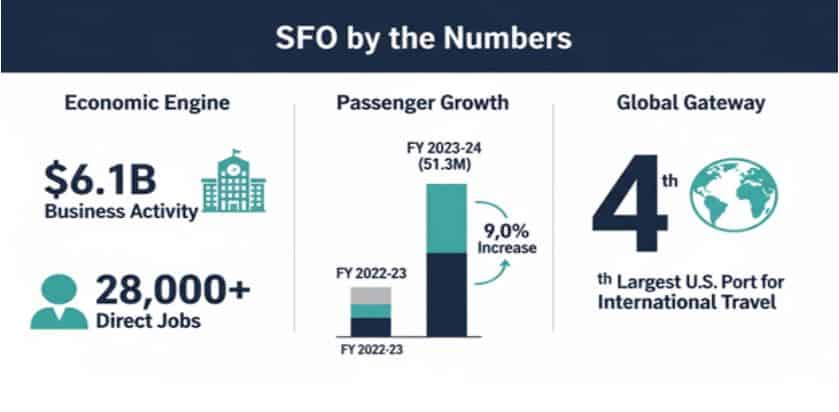
SFO’s significance extends far beyond its operational capacity. It is a critical economic engine for the Bay Area, generating substantial direct jobs and business activity. In FY 2021, SFO generated over 28,000 direct jobs and $6.1B in business activity [San Francisco International Airport, 2021]. The airport handled over 51.3 million passengers in FY 2023-2024, an increase of 9.0% from the previous year [San Francisco International Airport Annual Report, 2025], underscoring its growing importance in global air travel. Furthermore, in January 2025, SFO ranked as the fourth largest U.S. port serving international locations with 1.278 million passengers [International Trade Administration, 2025], solidifying its role as a premier international gateway. Its impressive infrastructure and commitment to passenger experience have earned it accolades, including a score of 611 out of 1,000 in J.D. Power’s 2023–2024 survey, ranking sixth among mega airports [SFGATE, 2024].
What You’ll Find in This Guide: Your Roadmap to Stress-Free Travel
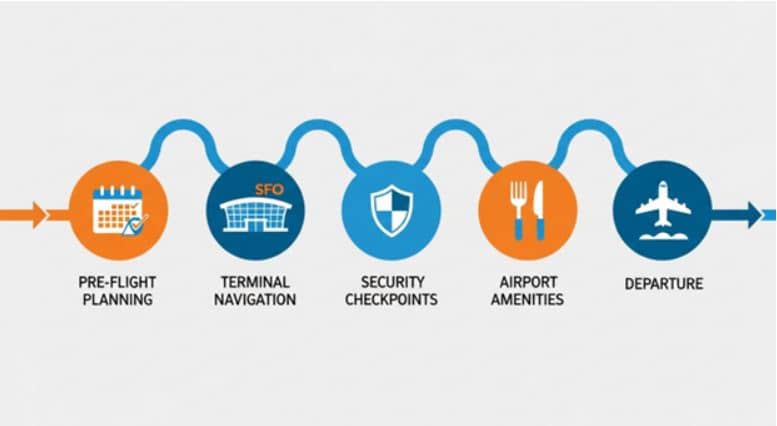
This comprehensive guide is designed to equip every traveler with the knowledge needed for a seamless experience at SFO. We will cover essential pre-flight preparations, including understanding ID requirements and navigating parking options. You’ll gain a clear understanding of SFO’s terminal landscape, from the modern Harvey Milk Terminal 1 to the expansive International Terminal, and learn how to effectively utilize the AirTrain system for inter-terminal connections. Furthermore, we will provide practical advice on navigating check-in and security checkpoints, explore the diverse amenities and dining options available, and offer tips for smooth arrivals and connections. Finally, we will explore ground transportation options and share smart traveler tips to enhance your journey.
Before You Go: Essential Pre-Flight Planning for SFO
Proactive planning is the cornerstone of a stress-free travel experience, and SFO is no exception. Understanding the requirements and options available before you arrive can significantly streamline your journey through the airport, allowing you to bypass potential hurdles and maximize your time.
ID Requirements: Ensuring a Smooth Start (REAL ID)
For domestic flights within the United States, possessing a compliant identification document is crucial. Starting May 7, 2025, travelers will need a REAL ID-compliant driver’s license or identification card, or another acceptable form of identification, to board federally regulated commercial aircraft. This includes identification issued by the U.S. Department of Homeland Security, U.S. passports and passport cards, U.S. military IDs, and other federally recognized credentials. Travelers should verify their identification well in advance of their departure date to avoid any last-minute complications. Ensuring your ID Requirements are met is the first step toward a smooth start to your journey.
Expedited Security Programs: Save Time, Skip Lines (TSA Precheck, Global Entry, CLEAR lanes)
To expedite the security checkpoints process, SFO, like many major airports, participates in several trusted traveler programs. TSA Precheck offers expedited screening for participating passengers at designated lanes, allowing them to keep on their shoes, coats, and belts, and leave laptops and compliant liquids in their carry-on bags. Global Entry is a U.S. Customs and Border Protection program that speeds up arrival for pre-approved, low-risk travelers entering the United States; it also includes TSA Precheck benefits. CLEAR lanes provide biometric identity verification to bypass the traditional ID check at security, allowing members to move more quickly to the physical screening portion of the checkpoint. Enrollment in these programs requires an application and background check, but the time saved at security checkpoints can be substantial, making it a valuable investment for frequent flyers.
Parking at SFO: A Comprehensive Guide
Parking at San Francisco International Airport offers several options to suit various needs and budgets. The airport provides efficient solutions for short-term visits and extended stays. Travelers can choose from the International Garage, the Domestic Garages (serving Terminal 1, Terminal 2, and Terminal 3), and the economical Daily Garage. For those seeking Long-Term Parking, the Long-Term Garage is available, accessible via the AirTrain. Valet parking services are also offered for added convenience. It is highly recommended to reserve your parking spot in advance, especially during peak travel seasons, through the official SFO website to guarantee availability and potentially secure better rates. Real-time parking availability can also be checked on the SFO website, helping travelers make informed decisions before arriving. For those looking for specific parking solutions, exploring options like Kiss & Fly zones for quick drop-offs is also advisable.
Getting to SFO by Public Transportation: Eco-Friendly & Efficient Options
Public transportation offers an environmentally conscious and often more economical way to reach SFO from across the Bay Area. The primary public transit option is the BART system (Bay Area Rapid Transit), which connects directly to the airport via its SFO International Terminal station, conveniently located on Level 3. BART trains provide frequent service to downtown San Francisco and numerous other Bay Area communities. Additionally, SamTrans bus services operate routes to and from the airport, serving various destinations within San Mateo County. For seamless travel on these systems, consider using a Clipper Transit Card, which can be loaded with funds and used for fares on BART, SamTrans, and other regional transit agencies. The SFO website provides detailed route maps and schedules for all public transit options.
Curbside Drop-off & Pick-up: Rules and Etiquette (curbside)
SFO implements specific rules for curbside drop-off and pick-up to ensure efficient traffic flow and safety. For passenger drop-offs, drivers are permitted to stop briefly at the designated curbside zones in front of each terminal to allow passengers to disembark. Continuous flow is encouraged, and vehicles should not be left unattended. Pick-up zones are also clearly marked, but it is important for waiting parties to coordinate closely with their drivers to minimize dwell times and congestion. For ride-sharing services like Uber and Lyft, designated pick-up areas are established in specific locations away from immediate terminal entrances, usually accessible via the AirTrain or shuttle buses, and these are clearly signposted. Following these guidelines ensures a smoother experience for all travelers, including those utilizing the Kiss n’ Fly zones.
SFO’s Terminal Landscape: Your Home Before Takeoff
Understanding the layout of San Francisco International Airport is key to navigating it efficiently. SFO is comprised of four main terminals, each serving distinct airlines and flight types, along with a comprehensive transit system to connect them. This detailed breakdown will help you locate your airline and navigate between terminals with ease.
Understanding SFO’s Layout: Domestic vs. International Terminals
SFO features a distinctive layout, primarily divided into domestic flights and international flights. Terminals 1, 2, and 3 primarily handle domestic flights, while the International Terminal is dedicated to global travelers. While terminals were historically more isolated, ongoing modernization efforts are enhancing connections. The airport’s central roadway system facilitates access to all terminals, and the AirTrain system serves as the primary connector between them, offering a crucial link for passengers transferring between flights or needing to access different airport facilities. The airport’s main roads let people reach all terminals, and the AirTrain connects the terminals, helping passengers transfer between flights or reach different airport areas.
Harvey Milk Terminal 1: A Modern Domestic Experience (Harvey Milk Terminal 1, Terminal 1)
The Harvey Milk Terminal 1 (often referred to as Terminal 1) is a state-of-the-art facility that has undergone extensive renovation, presenting a bright, modern environment for domestic flights. This terminal is home to several major airlines, including Alaska Airlines, American Airlines, and Delta Air Lines for some of their domestic operations, as well as Southwest Airlines. The redesign of Harvey Milk Terminal 1 has focused on enhancing the passenger experience with improved amenities, spacious gate areas, and integrated public art installations, reflecting the vibrant culture of San Francisco. Its central location makes it a pivotal point for many travelers. This terminal provides a modern and welcoming atmosphere for passengers.
Terminal 2: A Bright & Airy Space
Terminal 2 at SFO is known for its light-filled spaces and contemporary design, providing a pleasant atmosphere for passengers departing on domestic flights. This terminal primarily serves American Airlines and Virgin America (now part of Alaska Airlines), offering a streamlined experience with modern amenities. Terminal 2 features a curated selection of dining and retail options, alongside efficient security checkpoints, designed to minimize wait times. Its bright, airy design contributes to a more relaxed pre-flight environment for travelers.
Terminal 3: United Airlines’ Primary Hub
Terminal 3 is the largest terminal at SFO and serves as the primary hub for United Airlines. It handles a significant volume of domestic flights and some international routes operated by United Airlines. This terminal offers a wide array of services, including numerous dining options, retail outlets, and the highly regarded United Club lounges. Terminal 3 is equipped with multiple security checkpoints to manage the flow of a large number of passengers. Its extensive gates and facilities cater to the needs of United Airlines‘ extensive network, making it a key point of transit for many travelers.
The International Terminal: Your Global Gateway
The International Terminal at SFO is the largest airport terminal in North America and serves as the central hub for all international flights. It is divided into two main concourses, G and I. Concourse G is primarily used by airlines operating international flights, including Air Canada, KLM, Lufthansa, and SWISS, among others. Concourse I is home to international carriers such as British Airways, Emirates, Singapore Airlines, and Turkish Airlines. This terminal is designed to efficiently process the unique requirements of international travelers, featuring extensive customs and immigration facilities, numerous airline lounges, and a wide variety of global dining and shopping experiences. It is the gateway for passengers arriving from and departing to destinations around the world. This terminal has many duty-free shops. Passengers leaving on international flights can buy liquor, tobacco, perfumes, and luxury goods there.
Connecting Between Terminals: The AirTrain System (AirTrain, AirTrain Blue Line)
The AirTrain is SFO’s automated light rail system, offering a free and efficient way for passengers to connect between all terminals, the BART station, parking garages, and the Rental Car Center. The AirTrain operates on two lines: the AirTrain Blue Line and the AirTrain Red Line. The Blue Line provides service to all terminals and parking areas, operating every 5-10 minutes. The Red Line circulates only within the car rental and long-term parking areas. Crucially, the AirTrain operates both pre-security (accessible from any terminal) and post-security (connecting G Gates and Concourse I of the International Terminal to Terminal 1, Terminal 2, and Terminal 3), making it indispensable for travelers with connecting international flights or those needing to reach a different airline’s check-in counter. Knowing AirTrain routes helps navigate the airport efficiently. The AirTrain is SFO’s free automated light rail connecting all terminals, the BART station, parking garages, and Rental Car Center. It has two lines: Blue Line, serving all terminals and parking every 5-10 minutes, and Red Line, circulating car rental and long-term parking areas. The AirTrain runs both before security and after security. It connects terminals G and I of the International Terminal to Terminals 1, 2, and 3. Travelers with connecting international flights or those who need to reach a different airline’s check-in counter must use it.
Check-In & Security: Mastering the Flow
The check-in and security process is a critical phase of any air journey. SFO offers multiple options to streamline this, and understanding what to expect at the security checkpoints can significantly reduce stress and ensure you reach your gate with time to spare.
Check-In Options: Online, Kiosk, or Counter (website, airline apps)
Modern travelers have several convenient ways to check in for their flights. Most airlines operating out of SFO allow passengers to check in online via their website or dedicated airline apps up to 24 hours before departure. This allows you to select your seat, confirm your itinerary, and receive a mobile boarding pass, which can often expedite your passage through the airport. Alternatively, self-service kiosks are readily available in each terminal, offering a quick way to print boarding passes and check baggage. For those who prefer face-to-face assistance or have specific needs, traditional ticket counters are also staffed by airline representatives. Leveraging these options based on your personal preference and time constraints can make a significant difference in your overall airport experience.
Navigating Security Checkpoints: What to Expect
Navigating SFO’s security checkpoints requires a combination of preparation and awareness. The airport has multiple security checkpoints located within each terminal, with varying hours of operation. It is advisable to check the SFO website for real-time wait times and specific checkpoint hours for your terminal. When approaching security, have your boarding pass and identification readily accessible. Travelers are typically required to remove laptops and large electronics from their carry-on bags, as well as liquids exceeding 3.4 ounces. Understanding TSA’s 3-1-1 liquid rule and packing accordingly can prevent delays. For those enrolled in expedited screening programs like TSA Precheck or CLEAR lanes, proceed to their designated lanes for a faster screening process. Efficient packing and adherence to TSA guidelines are key to navigating the security checkpoints smoothly.
International Arrivals: Customs & Immigration
Upon arrival at SFO from an international flight, passengers will proceed through U.S. Customs and Immigration. The International Terminal is equipped with robust facilities to handle these processes efficiently. Upon disembarking, follow the signs for “Immigration and U.S. Customs.” You will typically need to have your passport and any required customs declaration forms ready. The process involves meeting with a Customs and Border Protection officer who will review your documents and may ask questions about your travel. After clearing immigration, you will proceed to baggage claim to collect your luggage, and then through U.S. Customs for final inspection. Global Entry members can utilize designated kiosks for a significantly expedited process. The Deferred Inspection program is also available for specific situations requiring further customs examination.
Maximizing Your Time at SFO: Amenities & Experiences
SFO is renowned for offering a rich array of amenities and unique experiences that go far beyond basic airport services, transforming waiting time into an opportunity for enjoyment, relaxation, or productivity. This airport is designed to be a destination in itself, reflecting the vibrant culture and innovation of the Bay Area.
SFO’s Diverse Food Scene: From Quick Bites to Sit-Down Meals (food scene)
The food scene at SFO is consistently lauded as one of the best among major airports, featuring a wide spectrum of culinary options that reflect the diverse flavors of San Francisco and the Bay Area. From quick-service cafes and grab-and-go delis to upscale restaurants with full-service dining, there is something to satisfy every palate and time constraint. Many establishments showcase local chefs and ingredients, offering a genuine taste of Northern California. Travelers can find everything from artisanal pastries at places like Dogpatch Bakehouse and Cafe to gourmet burgers and fresh seafood. Exploring the diverse dining options across the terminals can be an experience in itself, providing a welcome respite and a taste of local flavor before your flight.
Shopping Outlets: Souvenirs, Essentials, and Duty-Free
SFO provides a comprehensive shopping experience for travelers seeking everything from last-minute essentials to unique souvenirs and duty-free items. Each terminal boasts a variety of retail outlets, including popular fashion brands, bookstores, electronics stores, and specialty shops offering local artisan crafts and San Francisco-themed gifts. The International Terminal features extensive duty-free shopping opportunities for passengers departing on international flights, offering a wide selection of liquor, tobacco, perfumes, and luxury goods. Whether you need travel essentials, a keepsake, or a treat for yourself, SFO’s shopping outlets are designed to cater to every need.
Airport Lounges: A Haven for Relaxation and Productivity (Lounges, Delta Sky Club, United Club, Lounge)
For travelers seeking a more exclusive and comfortable pre-flight experience, SFO offers a variety of airport lounges. Major airlines like United Airlines (with its United Club lounges) and Delta Air Lines (with its Delta Sky Club) operate premium lounges in their respective terminals, offering amenities such as comfortable seating, complimentary food and beverages, Wi-Fi, and business facilities. Major airlines like United and Delta have premium lounges in their terminals. United has United Club lounges. Delta has Delta Sky Club lounges. These lounges provide a tranquil environment away from the general airport hustle, allowing passengers to relax, work, or refresh before their flight. Other independent lounges are also available, providing options for a broader range of travelers.
Unique SFO Features: Don’t Miss These Experiences
SFO is committed to enriching the passenger experience beyond standard airport services by integrating art, culture, and unique recreational spaces. The SFO Museum, located throughout the terminals, showcases diverse art exhibitions and historical displays, offering travelers a glimpse into the region’s rich heritage and artistic talent. Notably, the Harvey Milk Terminal 1 features several striking art installations, including pieces that honor the life and legacy of Harvey Milk. The airport also boasts a SkyTerrace at the International Terminal offering panoramic views of the airfield, and Pet Relief Areas for travelers with animal companions. The Wag Brigade, a team of therapy animals, also visits passengers to reduce stress. These distinctive features contribute to SFO’s reputation for providing an engaging and memorable airport journey.
Services for Families: Traveling with Children
SFO is well-equipped to accommodate families traveling with children, ensuring a more comfortable and less stressful experience for all. The airport provides family-friendly restrooms, nursing facilities, and dedicated Kids’ Spots in several terminals, offering a space for younger travelers to expend energy before a flight. Many restaurants offer children’s menus, and retailers carry a range of toys and travel essentials for kids. Airlines typically have specific procedures for families boarding with young children, and airport staff are generally available to assist with any special needs. Planning ahead and utilizing the airport’s family-oriented amenities can make a significant difference for parents on the go.
Services for Pets: Traveling with Four-Legged Friends (Pet Relief Areas)
Recognizing that many travelers are accompanied by their pets, SFO provides convenient Pet Relief Areas. These designated outdoor spaces are located throughout the airport’s terminals, offering a place for animals to relieve themselves before or after their flight. Some indoor pet relief stations are also available, typically located post-security, providing a comfortable and hygienic option for service animals and pets. Travelers are advised to consult the SFO website for the exact locations of these Pet Relief Areas within each terminal. Adhering to airline regulations regarding pet travel and utilizing these facilities ensures a smoother journey for both the traveler and their animal companion.
Staying Connected: Free Wi-Fi and Charging Stations
In today’s connected world, staying online is essential for most travelers. SFO offers complimentary, high-speed Wi-Fi access throughout all terminals, allowing passengers to browse the internet, check emails, stream content, and stay in touch with loved ones. Numerous charging stations and power outlets are strategically located near gate areas, in lounges, and throughout the terminals, ensuring that travelers can keep their electronic devices powered up during their time at the airport. Whether you need to catch up on work, entertain yourself, or coordinate your arrival, SFO makes it easy to stay connected.
Arrivals & Connections: Smooth Transitions
Landing at SFO and navigating your onward journey, whether it’s collecting baggage, catching a connecting flight, or simply making your way to the exit, is designed to be as efficient as possible. Understanding the process for arrivals and connections is key to a seamless end to your flight.
Baggage Claim
Upon arrival, follow the overhead signs for “Baggage Claim.” Each terminal has designated baggage carousels for arriving flights. The SFO website and airport display screens provide real-time information on which carousel corresponds to your flight. Allow ample time for luggage to be delivered, especially during busy periods. If your luggage does not arrive or is damaged, proceed to your airline’s baggage service office, typically located near the baggage claim area, to file a report. How to Locate and Use Baggage Claim at SFO is straightforward if you follow the clear signage.
Connecting Flights at SFO
Connecting through SFO, particularly between domestic flights and international flights, requires careful planning. The AirTrain system is invaluable for inter-terminal travel, especially for connecting passengers. If your connecting flight is in a different terminal, utilize the AirTrain Blue Line to move between terminals quickly. Remember to factor in potential delays, security checkpoints re-screening if you are moving between different security zones, and the time needed to navigate the airport. If you have a tight connection, inform the gate agent upon arrival; they may be able to assist. SFO handled 29.50% of flights delayed in 2024, highlighting the importance of allowing buffer time for connections [InsureMyTrip, 2022].
Long Layover Survival Guide
If you find yourself with a significant layover at SFO, the airport offers ample opportunities to make the most of your time. Beyond the diverse dining and shopping amenities, consider visiting the SFO Museum exhibits, relaxing in an airport lounge, or enjoying the unique features like the SkyTerrace. For longer layovers, the proximity of SFO to San Francisco and other Bay Area attractions makes a brief excursion feasible. The BART system provides direct access to downtown San Francisco in about 25-30 minutes, allowing for a quick exploration of popular spots like Fisherman’s Wharf or a stroll through the Embarcadero. Plan your excursion carefully, factoring in travel time back to the airport and the need to clear security checkpoints and reach your departure gate.
Getting To & From SFO: Your Bay Area Ground Transportation Hub
SFO serves as a critical gateway to the San Francisco Bay Area, offering a comprehensive range of ground transportation options for travelers arriving or departing. Whether you prefer the convenience of ride-sharing, the efficiency of public transit, or the freedom of a rental car, SFO has you covered.
Rental Cars
For those who prefer the flexibility of driving themselves, SFO hosts a consolidated Rental Car Center. This facility houses the fleet operations for most major rental car companies. A complimentary AirTrain shuttle service connects all airport terminals to the Rental Car Center, making it easily accessible for arriving passengers. It is advisable to reserve your rental car in advance, especially during peak seasons, to ensure availability and potentially secure better rates. Accessing Rental Cars via SFO Rental Car Center is a seamless process thanks to the airport’s efficient shuttle system.
Public Transportation from SFO
Beyond BART, which offers rapid transit to downtown San Francisco and surrounding areas, other public transportation options connect SFO to the wider Bay Area. SamTrans buses provide service to various destinations within San Mateo County and beyond, offering a more localized transit solution. Caltrain also offers a rail connection, though it requires a short shuttle ride from the airport to its station in Millbrae. These options are budget-friendly and environmentally sustainable ways to explore the region. The SFO website offers detailed information and schedules for all public transit services.
Ride App Services (Uber/Lyft)
Ride-sharing services like Uber and Lyft are readily available at SFO. Designated pick-up zones are established for these services to manage traffic flow and ensure passengers can easily find their ride. These zones are typically located a short distance from the terminals, and clear signage directs travelers to the correct locations. Passengers should use their respective apps to request a vehicle and follow the airport’s guidance for locating their designated pick-up spot.
Taxis and Shuttles
Traditional taxi services are available at SFO, with clearly marked taxi stands located outside the arrivals level of each terminal. For shared rides, various shuttle services, including Super Shuttle, operate from SFO, offering door-to-door service to hotels and destinations throughout the Bay Area. These services can be booked in advance or upon arrival. It is important to confirm the legitimacy of any shuttle service operating at the airport.
Hotels Near SFO with Shuttle Services
Numerous hotels are located in close proximity to SFO, many of which offer complimentary shuttle services for their guests. These hotels provide convenient accommodation for travelers with early morning departures, late-night arrivals, or long layovers. Popular options include the Hyatt Regency San Francisco Airport and The Grand Hyatt at SFO, among others. Checking a hotel’s proximity and shuttle availability on the SFO website or directly with the hotel can simplify your accommodation plans.
Bicycle Parking
For environmentally conscious travelers arriving or departing by bicycle, SFO provides dedicated Bicycle parking facilities. These are typically located in secure areas, offering a safe place to store your bicycle. Information on the location of these facilities can be found on the SFO website, along with details on any associated fees or access procedures. Finding Secure Bicycle Parking at SFO is a straightforward process for cycling enthusiasts.
SFO Smart Traveler: Pro Tips & Important Information
Becoming a “smart traveler” means being informed and prepared. SFO offers a range of services and resources to enhance accessibility, manage potential disruptions, and promote sustainability, ensuring a more efficient and pleasant journey. Essential Tips for Navigating San Francisco International Airport can make all the difference.
Accessibility Services at SFO
SFO is committed to providing comprehensive accessibility services for travelers with disabilities. This includes wheelchair assistance, accessible restrooms, TTY phones, and visual paging systems. Airlines provide wheelchair services from check-in to the gate, and airport staff are available to assist with navigation. Travelers requiring special assistance should notify their airline at least 48 hours in advance of their flight to ensure their needs are met. The SFO website provides detailed information on all accessibility services available.
Health & Wellness Facilities
SFO prioritizes the health and well-being of its passengers. The airport features an SFO Medical Clinic offering basic medical services and urgent care. Additionally, various testing facilities, such as XpresCheck, are often available to provide COVID-19 testing and other health screenings. Staying updated on health guidelines and utilizing these facilities can contribute to a safer and more comfortable travel experience.
Lost & Found
If you misplace an item at SFO, the airport’s Lost and Found department is your point of contact. Items found within the terminals, parking garages, or on the AirTrain are typically turned in here. You can contact the Lost and Found office via phone or through the SFO website, providing a detailed description of the item and where it was last seen to aid in its recovery.
Navigating Unexpected Delays or Cancellations
Airports like SFO can experience flight delays and cancellations due to weather, operational issues, or other factors. SFO was noted for having 29.50% of flights delayed in 2024 [InsureMyTrip, 2022]. In such situations, your airline is your primary resource for rebooking and information. Stay informed by checking your flight status via the airline’s website or app, and monitor airport information screens. If you have a long layover or are facing a cancellation, explore the amenities available within the airport, such as lounges or dining areas, or consider exploring the nearby Bay Area if time permits and travel arrangements allow.
SFO’s Commitment to Sustainability
SFO is a leader in airport sustainability initiatives. The airport has achieved LEED Gold status and is committed to reducing its environmental impact through various programs. This includes significant efforts in waste reduction, with SFO donating over 10,000 pounds of food through its “SFO Unites Against Hunger” program in 2022, equivalent to 8,000 meals [International Airport Review, 2023]. The airport also focuses on energy efficiency, water conservation, and promoting sustainable transportation options like BART and electric vehicle charging stations. These efforts contribute to a more responsible and environmentally conscious travel experience for all passengers. SFO also holds Fitwel certification, underscoring its commitment to health and well-being.
Contacting SFO
For any questions or assistance not covered in this guide, the most reliable source of information is the official San Francisco International Airport website (flysfo.com). The website provides up-to-date details on flight information, terminal maps, parking availability, amenities, transportation, and airport services. Information desks are also staffed throughout the terminals to provide in-person assistance to travelers. How to Contact San Francisco International Airport is best done through their official channels for the most accurate information.
Final Thoughts
Navigating San Francisco International Airport (SFO) can be a seamless and even enjoyable experience when approached with the right knowledge and preparation. This guide has equipped you with insights into everything from essential pre-flight planning, including understanding ID Requirements and leveraging expedited security programs like TSA Precheck, to mastering the nuances of SFO’s terminal landscape – from the modern Harvey Milk Terminal 1 to the global reach of the International Terminal. We’ve highlighted the efficiency of the AirTrain system for inter-terminal connections and provided practical advice for navigating security checkpoints. The diverse amenities, from SFO’s celebrated food scene to its unique art installations like those in Harvey Milk Terminal 1, are designed to enhance your journey.
As you plan your travels, remember the strategic advantages of SFO: its unparalleled connectivity for international flights to regions like Latin America and the South Pacific, its role as a vital hub for the entire Bay Area, and its ongoing commitment to innovation and sustainability, reflected in its LEED Gold status and Fitwel certification. Whether you’re flying Alaska Airlines, American Airlines, British Airways, or United Airlines, understanding the terminal assignments (Terminal 1, Terminal 2, Terminal 3, and the International Terminal with its G Gates) and utilizing resources like the SFO airport terminal map will ensure you find your way efficiently. Don’t forget the family-friendly Kids’ Spots and the convenience of the Rental Car Center. By embracing the information provided, from parking options to public transit via the BART system, you are well on your way to becoming an SFO smart traveler. This guide has aimed to demystify your journey, empowering you to experience the best of what San Francisco International Airport has to offer.